

Mechanical Accounting Made Simple: Step-by-Step Process, Examples & Key Concepts

What is Mechanical Accounting?
Mechanical accounting is the process of identifying, recording, classifying, and summarizing financial transactions using standardized accounting rules—without applying professional judgment or interpretation.
Mechanical accounting is the systematic, rule-driven execution of accounting tasks that ensures every financial transaction is accurately recorded, classified, and processed within the accounting system.
It represents the operational layer of accounting, where financial data is captured in a structured format so that it can later be analyzed, audited, and reported.
It is governed by predefined frameworks such as:
- Double-entry bookkeeping
- Chart of Accounts (CoA)
- Accounting standards (US GAAP / IFRS)
- Organizational accounting policies
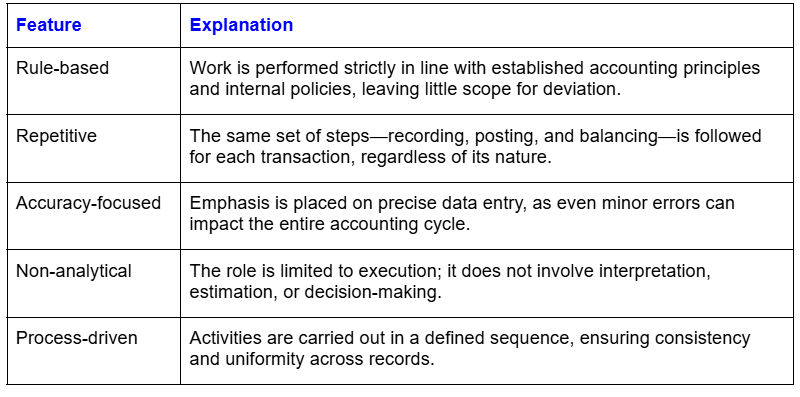
Key Characteristics of Mechanical Accounting
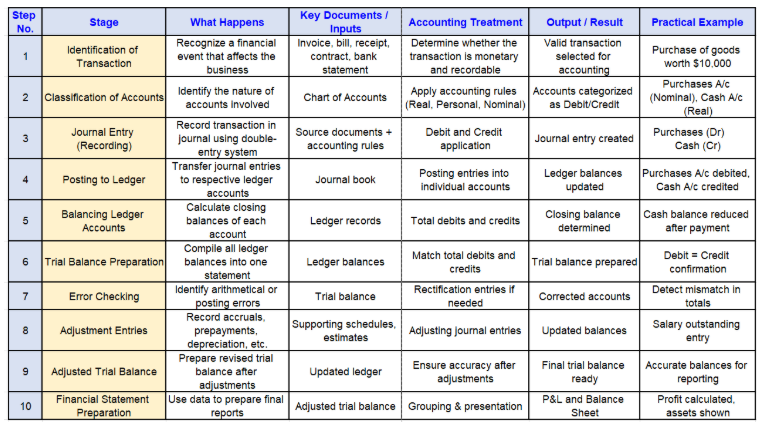
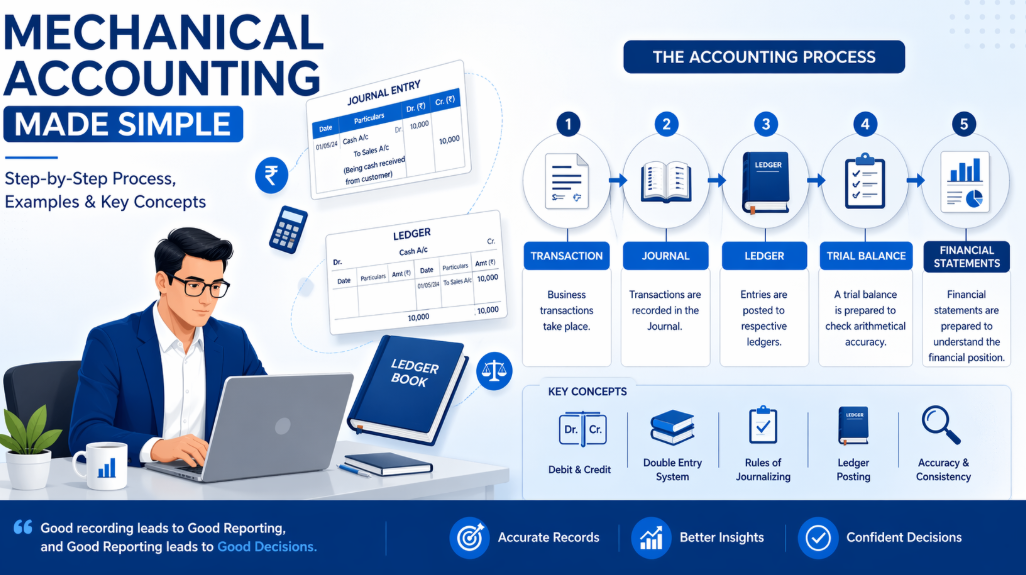
Process of Mechanical Accounting (Step-by-Step) in detail
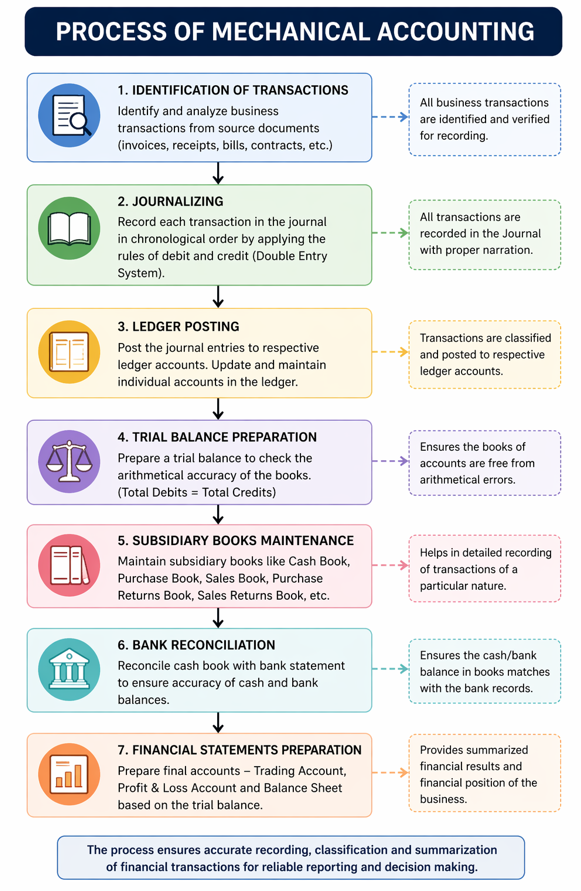
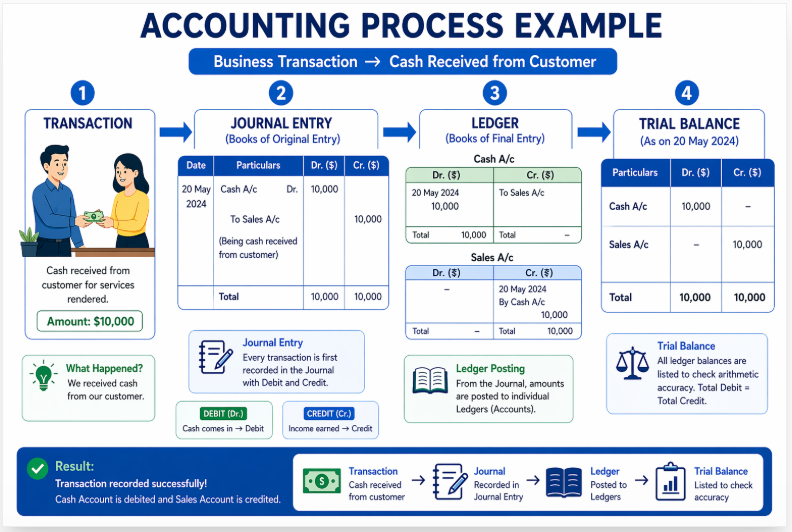
Flow of Mechanical Accounting
Transaction → Journal Entry → Ledger Posting → Trial Balance → Financial Statements
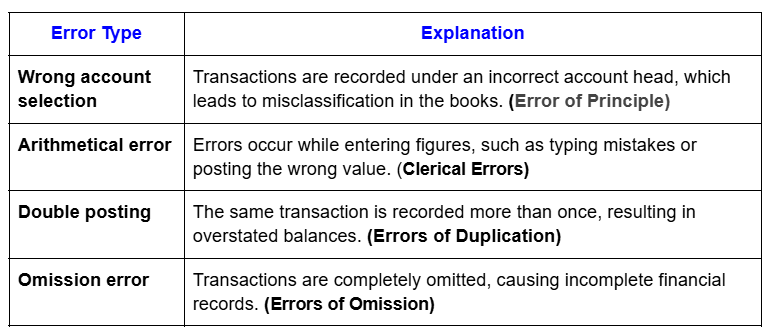
Common Errors in Mechanical Accounting
Even though the process is structured and rule-driven, errors can still arise in day-to-day execution:
Mechanical vs Analytical Accounting :-
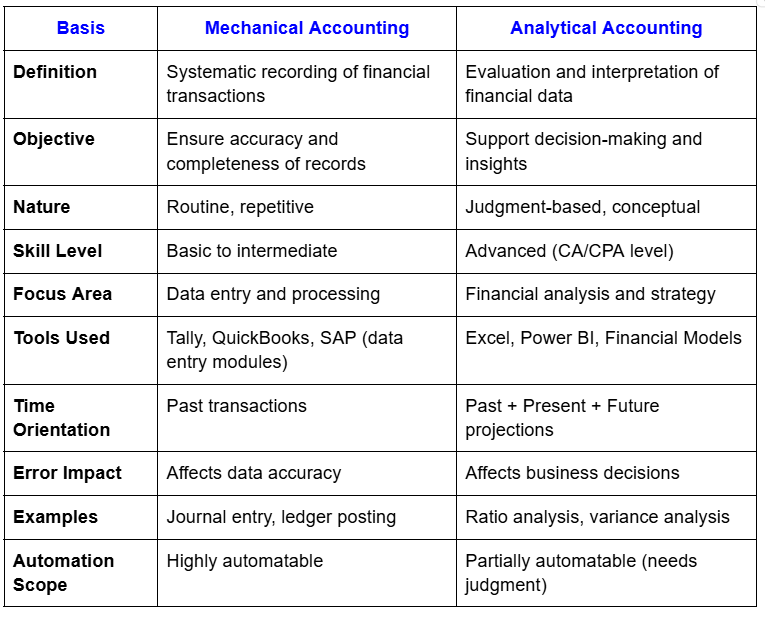
Understanding the distinction between mechanical accounting and analytical accounting is critical—especially if you're working in taxation, audit, or financial reporting. These are not competing concepts; they are two layers of the same system.
Mechanical Accounting → Focuses on recording transactions
Analytical Accounting → Focuses on interpreting those transactions
Conclusion
Mechanical and analytical accounting are not separate functions—they are closely connected stages of the same process. Mechanical accounting ensures that every transaction is recorded with precision and consistency, while analytical accounting builds on that data to uncover trends, evaluate performance, and guide decisions.
Accuracy alone is not enough in today’s environment. The real value lies in the ability to move beyond the numbers—connecting data to business outcomes, identifying risks and opportunities, and providing clear financial direction.
Shweta Goyal, CA, CPA
CA | CPA (License Awaited) | Expert in U.S. Taxation, Accounting, Auditing, and Regulatory Compliance

Mechanical Accounting Made Simple: Step-by-Step Process, Examples & Key Concepts
What is Mechanical Accounting?
Mechanical accounting is the process of identifying, recording, classifying, and summarizing financial transactions using standardized accounting rules—without applying professional judgment or interpretation.
Mechanical accounting is the systematic, rule-driven execution of accounting tasks that ensures every financial transaction is accurately recorded, classified, and processed within the accounting system.
It represents the operational layer of accounting, where financial data is captured in a structured format so that it can later be analyzed, audited, and reported.
It is governed by predefined frameworks such as:
- Double-entry bookkeeping
- Chart of Accounts (CoA)
- Accounting standards (US GAAP / IFRS)
- Organizational accounting policies
Key Characteristics of Mechanical Accounting
Process of Mechanical Accounting (Step-by-Step) in detail
Flow of Mechanical Accounting
Transaction → Journal Entry → Ledger Posting → Trial Balance → Financial Statements
Common Errors in Mechanical Accounting
Even though the process is structured and rule-driven, errors can still arise in day-to-day execution:
Mechanical vs Analytical Accounting :-
Understanding the distinction between mechanical accounting and analytical accounting is critical—especially if you're working in taxation, audit, or financial reporting. These are not competing concepts; they are two layers of the same system.
Mechanical Accounting → Focuses on recording transactions
Analytical Accounting → Focuses on interpreting those transactions
Conclusion
Mechanical and analytical accounting are not separate functions—they are closely connected stages of the same process. Mechanical accounting ensures that every transaction is recorded with precision and consistency, while analytical accounting builds on that data to uncover trends, evaluate performance, and guide decisions.
Accuracy alone is not enough in today’s environment. The real value lies in the ability to move beyond the numbers—connecting data to business outcomes, identifying risks and opportunities, and providing clear financial direction.
Shweta Goyal, CA, CPA
CA | CPA (License Awaited) | Expert in U.S. Taxation, Accounting, Auditing, and Regulatory Compliance

Mechanical Accounting Made Simple: Step-by-Step Process, Examples & Key Concepts
What is Mechanical Accounting?
Mechanical accounting is the process of identifying, recording, classifying, and summarizing financial transactions using standardized accounting rules—without applying professional judgment or interpretation.
Mechanical accounting is the systematic, rule-driven execution of accounting tasks that ensures every financial transaction is accurately recorded, classified, and processed within the accounting system.
It represents the operational layer of accounting, where financial data is captured in a structured format so that it can later be analyzed, audited, and reported.
It is governed by predefined frameworks such as:
- Double-entry bookkeeping
- Chart of Accounts (CoA)
- Accounting standards (US GAAP / IFRS)
- Organizational accounting policies
Key Characteristics of Mechanical Accounting
Process of Mechanical Accounting (Step-by-Step) in detail
Flow of Mechanical Accounting
Transaction → Journal Entry → Ledger Posting → Trial Balance → Financial Statements
Common Errors in Mechanical Accounting
Even though the process is structured and rule-driven, errors can still arise in day-to-day execution:
Mechanical vs Analytical Accounting :-
Understanding the distinction between mechanical accounting and analytical accounting is critical—especially if you're working in taxation, audit, or financial reporting. These are not competing concepts; they are two layers of the same system.
Mechanical Accounting → Focuses on recording transactions
Analytical Accounting → Focuses on interpreting those transactions
Conclusion
Mechanical and analytical accounting are not separate functions—they are closely connected stages of the same process. Mechanical accounting ensures that every transaction is recorded with precision and consistency, while analytical accounting builds on that data to uncover trends, evaluate performance, and guide decisions.
Accuracy alone is not enough in today’s environment. The real value lies in the ability to move beyond the numbers—connecting data to business outcomes, identifying risks and opportunities, and providing clear financial direction.
Shweta Goyal, CA, CPA
CA | CPA (License Awaited) | Expert in U.S. Taxation, Accounting, Auditing, and Regulatory Compliance

Building the underlying operating system for the autonomous enterprise. Powering the next generation
of business leaders.

© 2026 PERSTOC.AI ALL RIGHTS RESERVED.